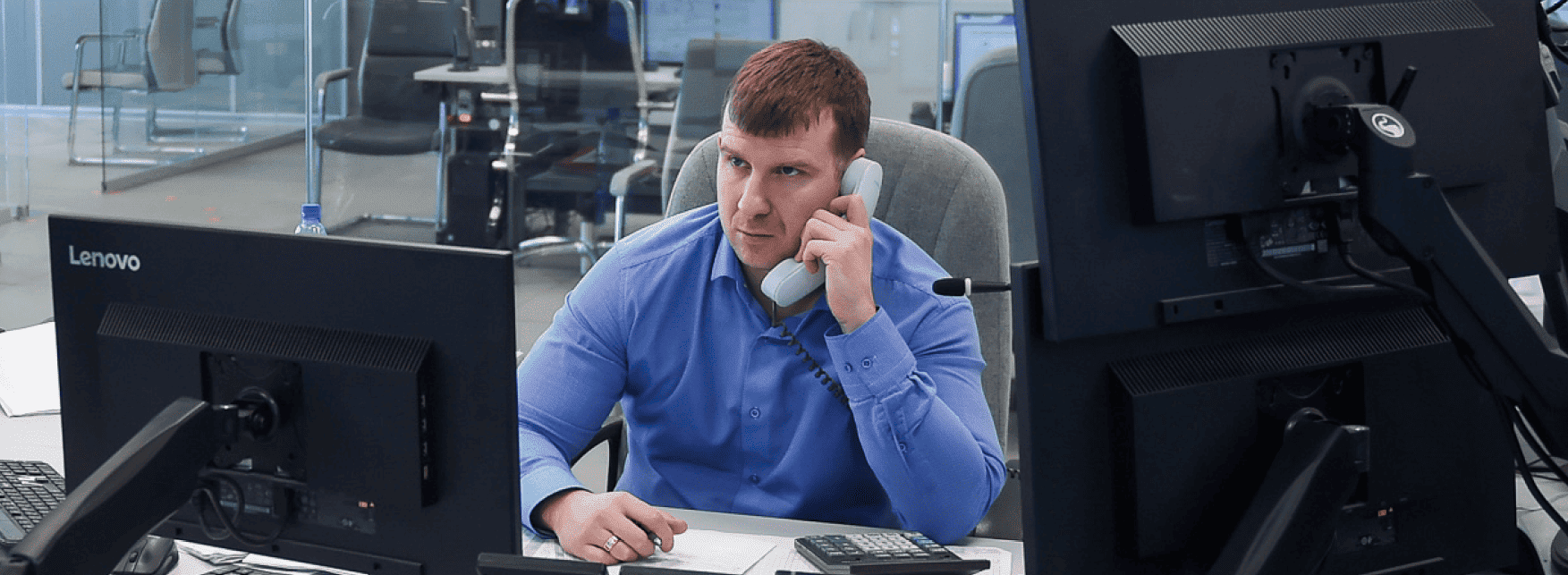
Nornickel’s Corporate Trust Line (CTL) is a core grievance mechanism, enabling all stakeholders to submit complaints and reports across a broad range of topics including violation of human rights, protection of assets and corporate interests, prevention of abuse, theft, and other violations. The CTL helps ensure transparency in stakeholder engagement and supports the mitigation of risks related to potential conflicts or unethical practices.
It covers all Company units and Group entities and maintains uniform standards in handling reports and enabling a prompt response to emerging concerns.
Timely and unbiased consideration of all incoming reports, regardless of the position or tenure of the individual involved
Organisational structure
The CTL operates within the remit of the Internal Control Department
Employeesresponsible for the operation of the CTL
CTL operators – initial processing of reports
Head of the CTL – coordination of activities, generation of reports
Director of the Internal Control Department – general oversight and strategic guidance of the CTL’s activities
Functions of organisational units
The Company’sunitsthat receive a request from the CTL are responsible for verifying the reported information, taking corrective actions, and submitting a follow‑up report to the CTL. They are also promptly informed about the outcomes of the report review to support further oversight and decision making
Involvement of independent experts
The Sustainable Development Department coordinates the engagement of independent experts, including for complaint consideration and mediation, if requested by the reporting person
Feedback
Reportingpersonsare provided with confirmation of the registration of their complaint/report, along with the option to complete a feedback form on the consideration and resolution process
Reporting
The Head of the CTL prepares a document containing report statistics by Group enterprise and by topic to inform unit heads and members of the Audit Committee of the Board of Directors.
CTL performance evaluation
Vice President – Head of Internal Control and Risk Management
Audit Committee of Nornickel’s Board of Directors
Companyemployeescovered by the “Let Everyone Be Heard. What Do You Think?” engagement survey via the questionnaire containing two questions about the CTL’s performance
The Corporate Trust Line operates in strict accordance with the established procedure rules, ensuring the prompt and unbiased consideration of incoming reports. The standard turnaround time – from the moment a report is registered by a CTL operator to the review of investigation results by the responsible manager – is 21 businessdays. However, in certain cases (such as reports that require urgent response or situations that require in‑depth analysis), the process may be accelerated or slowed down as needed.
If the reported information is confirmed, a set of corrective actions is initiated, including control measures, remediation of identified violations, and mitigation of potential consequences. When violations are identified, the Company addresses them while also developing measures to prevent similar cases in the future.
System for registering and reviewing reports submitted to the Corporate Trust Line
1st Krasnogvardeysky Drive 15, Moscow, Russia, 123112, Corporate Trust Line of MMC Norilsk Nickel
Information about the Corporate Trust Line is made available to employeesvia the intranet portal, the Company’swebsite, information screens, physical stands, posters, and payslips.
Operational statistics of the Corporate Trust Line in 2024
1279reports
were received in 2024 (–38.5%y‑o‑y). The decrease in the number of reports is attributed to the launch of initiatives aimed at resolvingemployeeconcerns promptly on the ground.Employeesare encouraged to raise their concerns with their immediate or higher‑level managers to help improve the effectiveness of addressing violations or deficiencies. If the issue is not resolved, the employeemay contact the Corporate Trust Line
651reports
were accepted for consideration in 2024
696reports
were resolved and closed in 2024 (26%confirmed, 74%not confirmed)Including the reports still pending at the beginning of 2024.
Corrective actions were taken to addressall identified deficiencies. These measures included:
purchasing and installing necessary equipment
repairing premises and equipment
remedying deficiencies across production and welfare facilities
establishing claim management with counterparties, including sanctions for non‑compliance with contract terms
executing documents for allowance, compensation, and bonus payments
providingemployeeswith tools and PPE
amending work and rest schedules
holding regular team meetings to clarify concerns related to remuneration or organisational changes
organising the work of commissions focused on resolving conflicts of interest and conflict situations
holdingemployeesat fault accountable through disciplinary action, including withholding bonuses.
As at 1 January 2024 and 31 December 2024, 146 and 101 reports were at the processing stage, respectively.Breakdown of reports by type in 2024
In 2024, the Corporate Trust Line and the Sustainable Development Department continued their collaborative efforts to advance the Company’s human rights agenda. As part of this work, an automated system was introduced to classify incoming reports by category and subcategory. For more details, please seeNornickel’s 2024 Human Rights Report.
Grievance mechanism
Nornickel’s grievance mechanism (GM) is a tool available to both Company employees and external stakeholders, including local residents in the regions where the Company operates, employees of suppliers and contractors, and indigenous communities.
The grievance mechanism is designed to facilitate the search for common ground, including with the involvement of an independent expert where appropriate. This approach helps ensure that the interests of all parties are taken into account and supports the prevention of conflict escalation. This mechanism does not replace existing public or corporate mechanisms for rights protection but serves as an additional tool for resolving disputes. Its use is entirely voluntary and does not in any way limit the right of citizens or organisations to seek recourse through government authorities to protect their legitimate interests.
Grievance process flow
The Company does not retaliate against reporting persons who raise concerns, meaning that no disciplinary action or sanction is taken. Reporting person status is regularly monitored at all levels to detect any cases of undue pressure.
Upon receipt of a complaint, the relevant Company unit is identified to verify the information, assess the need for additional data, and consider engaging independent experts or referring the case to government agencies.
The GM’s effectiveness is assessed on an ongoing basis through feedback from reporting persons and regular analysis of satisfaction levels, as well as annually through stakeholder consultations in the Company’s regions of operation and the “Let Everyone Be Heard. What Do You Think?” survey.
In 2024, particular attention was paid to standardising the process for handling complaints received through various channels and introducing unified operating principles. The Company continues to analyse incoming reports, identify systemic issues, and enhance feedback mechanisms to ensure timely responses and maintain a high level of stakeholder trust.
In 2024, Nornickel updated its corporate document on engagement with indigenous minorities, emphasising their right to independently determine their development priorities. The Company recognises the vulnerability of these communities and is committed to considering their interests in its operations. It provides indigenous minorities with an accessiblegrievance mechanism through which they can report any trespassing, desecration, or destruction of sacred sites or burial areas by Companyemployeesor contractors. The Company responds to such reports without delay and takes appropriate measures. The operation of the GM in the context of engagement with indigenous minorities is overseen by a third party (an independent expert).